
About ROOC
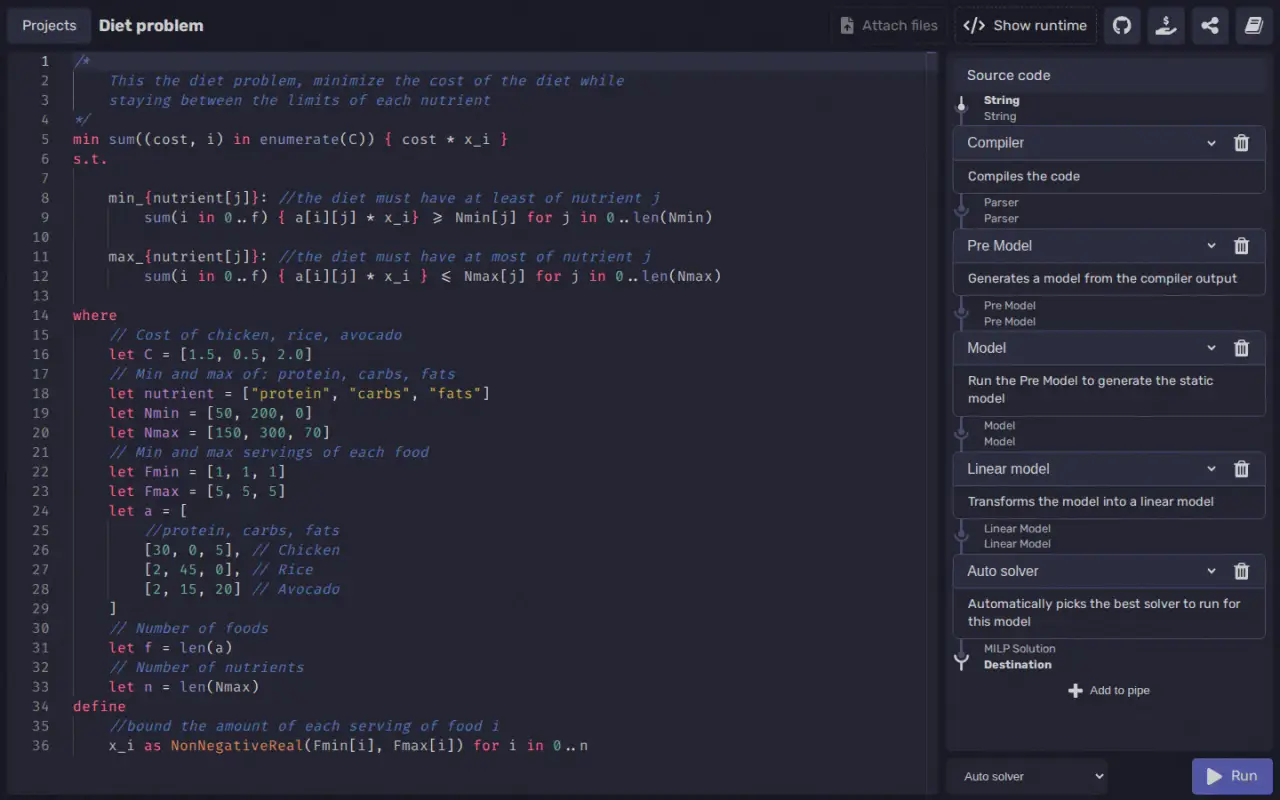
In ROOC, you describe an optimization problem with an objective, constraints and variables. The web editor solves the model in your browser using HiGHS or microlp.
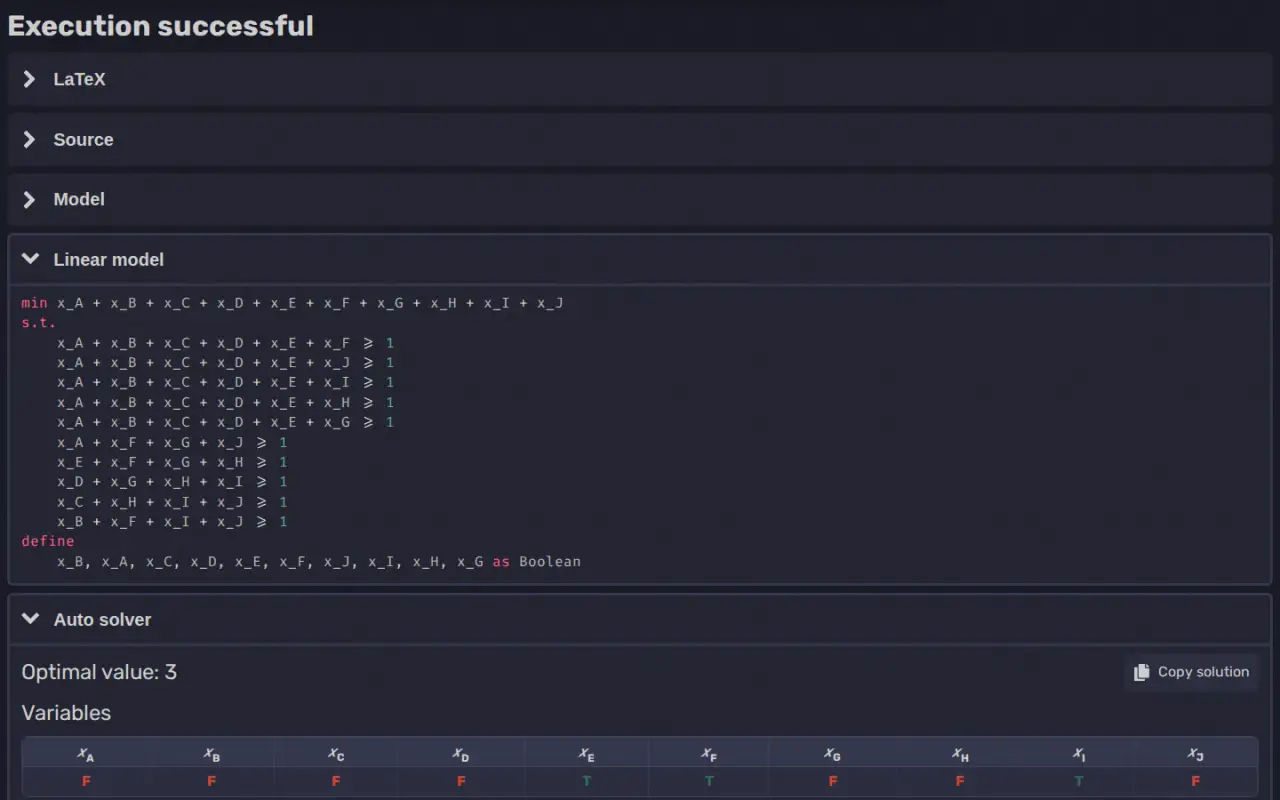
Models can include data, sets, graphs and iteration. You can inspect each stage of compilation, see the linear model passed to the solver, and export it in CPLEX LP format.
ROOC is also available as the rooc Rust crate and the @specy/rooc npm package. Both have type safe builders for defining models in code.
Features
Modeling language
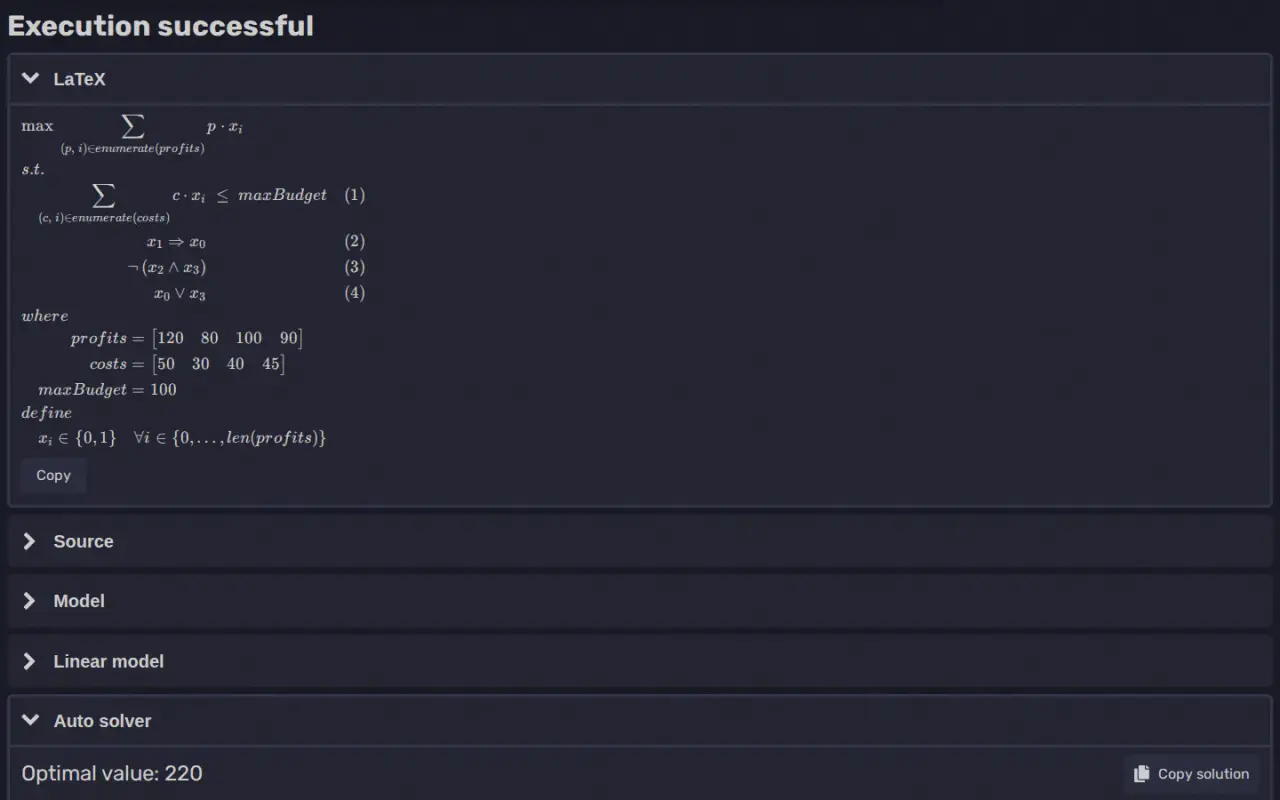
Define objectives and constraints using sums, indexed constraints, boolean logic, abs, min and max.
Data, sets and graphs
Keep data in the model and iterate over arrays, sets, graph nodes and edges.
Solvers in the browser
Run HiGHS or microlp in the browser, without a local installation.
Compilation steps
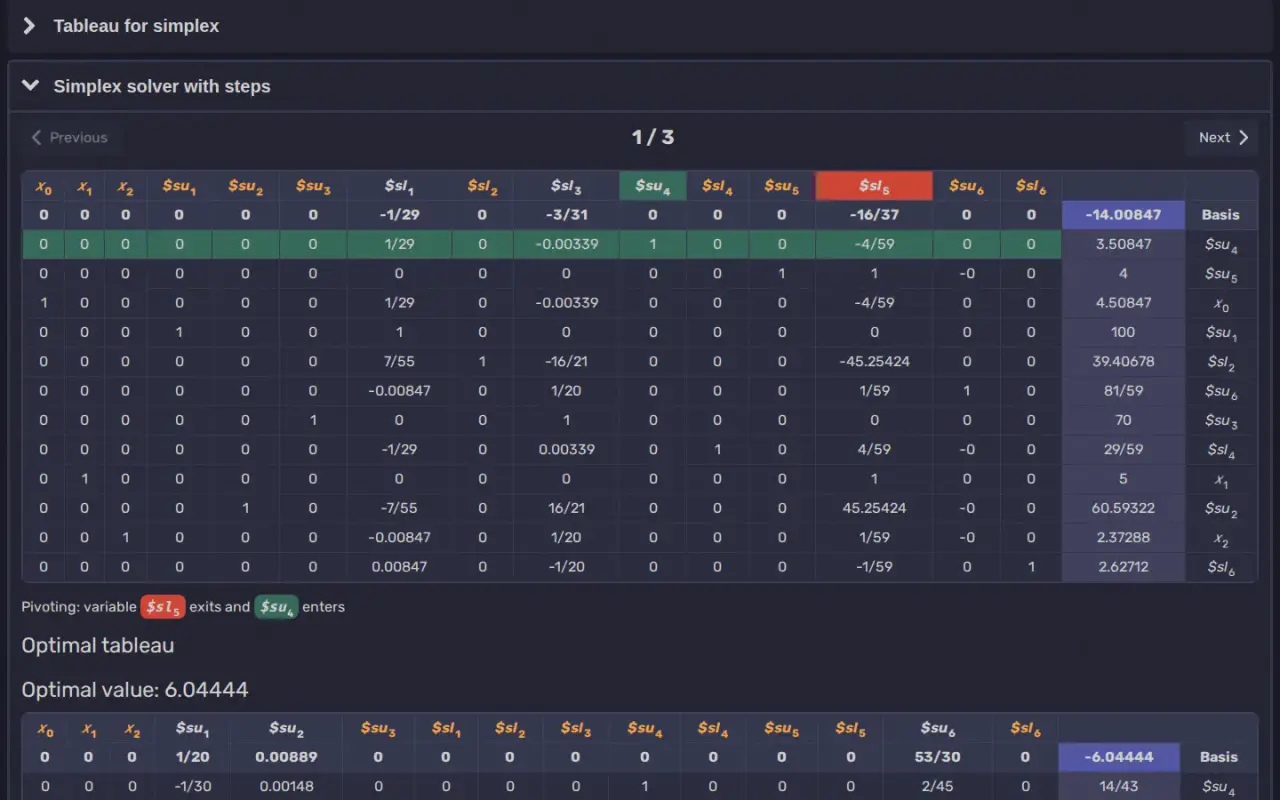
Inspect the output of each stage, from source code to the linear model sent to the solver.
CPLEX LP export
Export the linear model in CPLEX LP format for use with other solvers and tools.
Rust and TypeScript libraries
Define and solve models in code with the type safe builders in rooc and @specy/rooc.
From the blog
Optimization for Everyone: A magical way to solve problems
Bringing operational research and optimization models to more people, by making it easier to write and solve.
A rustc soundness bug in the wild
How a bug in the rustc compiler drove me to madness for two days
Source code and links
Other apps

Sky Music Nightly
A music player and composer for Sky: Children of the Light.

Genshin Music Nightly
A music player and composer for Genshin Impact instruments.

ASM Editor
An editor and debugger for M68K, MIPS, RISC-V, x86-64 and Z80 assembly.

Tokeko
An LR(1) and LALR parser visualizer.

Learn
My computer science notes from university, written in Italian.